
What is a Mala Necklace and How Do You Use One?
You’re walking past someone in a quiet street or a café, and a simple strand of beads catches your attention. It does not sparkle in a loud way. It just sits there, steady and unbothered, as it belongs to a slower rhythm of life. For a moment, you find yourself wondering what it is used for and why it feels different from regular jewelry.
A mala necklace is a strand of beads traditionally used for meditation, mindfulness, and intention setting. Most malas contain 108 beads and are used to guide repetition during breathing exercises, reflection, or mantra practice.
This blog explores what is a mala necklace, its spiritual roots, how it is used, and why it continues to bring calm and grounding into modern everyday life.
This blog helps you understand its meaning, how it is traditionally used, and how it fits into modern life as something that brings focus, calm, and a sense of grounding into everyday moments.
Let’s dig in.
What Is A Mala Necklace?
So, what is a mala necklace?
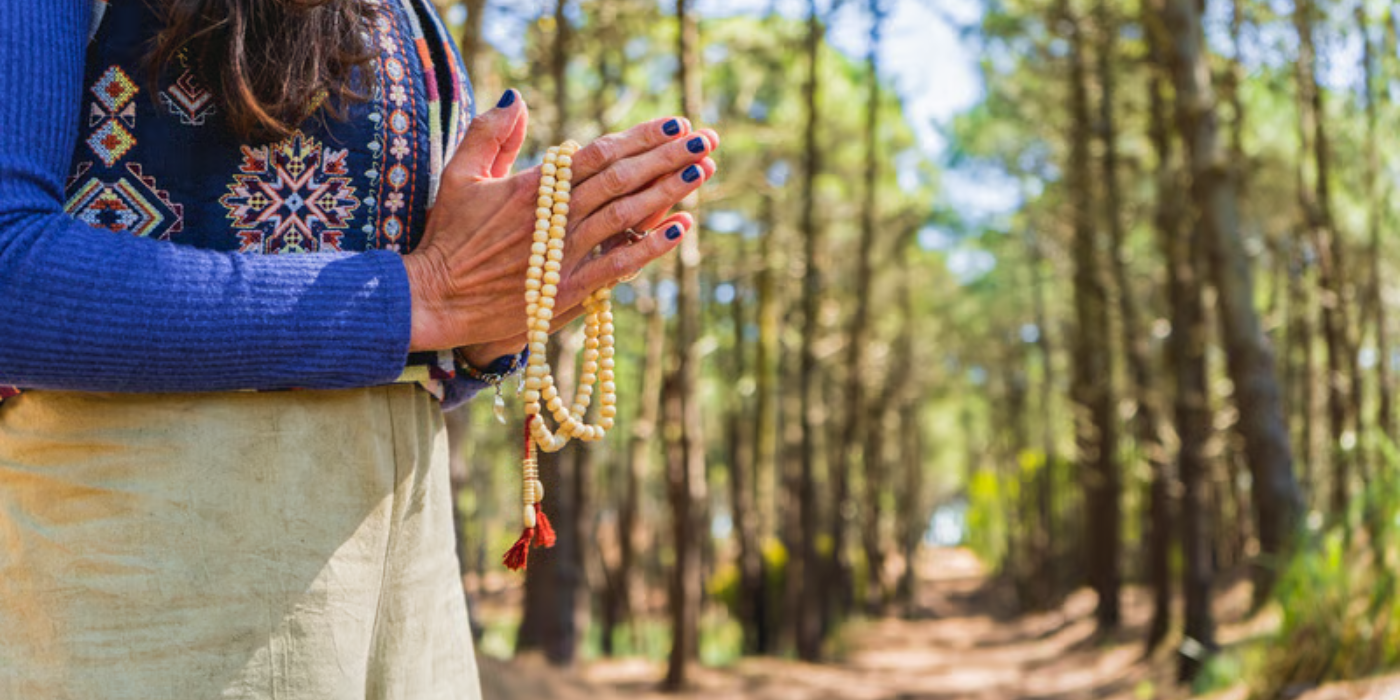
A mala necklace is a strand of beads traditionally used for meditation, mindfulness, repetition, and intention setting. Most malas are made with 108 beads, arranged in a loop that supports steady, rhythmic movement.
A mala usually includes:
-
108 beads in a continuous loop
-
A guru bead that marks the starting and ending point
-
Natural materials like wood, seeds, or stones
-
A tassel or knot that completes the strand
Unlike regular necklaces, a mala is not only worn for appearance. It is held, moved, and used with intention. That touch-based rhythm is what gives it a sense of calm structure.
Read more: Stunning Gemstone Necklaces to Gift Your Mom this Mother's Day
Mala Necklace Meaning Through Ancient Traditions

Mala necklace meaning is rooted in ancient religious practices.
Its origin is often linked to ancient Indian spiritual traditions, where early yogic practices used beads to count mantras during meditation. Texts connected to yoga philosophy, including teachings that later influenced Patanjali’s Yoga Sutras, highlight the importance of steady attention and breath awareness. Mala beads became a practical tool for that discipline, helping the mind stay anchored through repetition.
Over time, the use of malas spread across Buddhist traditions as well. Figures like Siddhartha Gautama (the Buddha) are associated with meditative practices that emphasize awareness, simplicity, and presence. In these traditions, malas were not decorations. They were a quiet companion during prayer and reflection.
Different Types Of Mala Necklaces
Mala necklaces come in different forms, each shaped by material, texture, and the feeling it carries. The structure stays similar, but the energy of each type feels slightly different depending on what it is made from.
The most common types are:
Traditional Seed Bead Malas
These malas are made from natural seeds like rudraksha or lotus seeds. They carry a raw, earthy texture that feels close to nature. Many people connect them with grounding and simplicity. The surface is often uneven, which adds to its natural feel.
Crystal And Gemstone Malas
Crystal malas use stones like amethyst, quartz, or turquoise. Each stone brings its own tone and visual depth. Some feel calm and soft, while others feel brighter or steadier. These are often chosen for their natural variation and emotional connection.
Sandalwood Malas
Sandalwood malas are known for their warm, woody scent and smooth touch. The texture feels steady and calming in the hand. Over time, the beads often become softer through use, which adds to their quiet presence.
Modern Hybrid Malas
Modern designs blend traditional structure with updated styling. These may mix stones, metals, or minimal accents while still keeping the classic bead count. They are often worn both for meaning and everyday styling.
Now that you understand what is a mala necklace and the different forms it can take, let’s explore the meaning and symbolism behind it.
Meaning And Symbolism Behind Mala Necklaces
A mala necklace carries meaning that grows slowly through use. It is shaped by rhythm, touch, and attention. Each bead becomes part of a quiet movement that keeps the mind steady and present.
Here are the meanings most often connected with it:
Spiritual Connection And Inner Awareness
Mala necklaces are linked with practices that focus on stillness and reflection. The movement of beads supports a gentle rhythm that helps the mind stay aware without forcing it. It creates space for calm attention in small, repeated actions.
Intention Setting And Personal Meaning
Many people hold a thought, phrase, or intention while using a mala. Each bead becomes a quiet reminder of that focus. Over time, this repetition helps turn a simple idea into something steady and present in daily life.
Energy Of Natural Materials
Wood, seeds, and stones are often used in malas because of their natural texture and feel. These materials carry a grounded presence. When held, they create a sense of stability that feels simple and real.
Role Of Repetition In Focus
Repetition is at the center of mala use. Moving from one bead to the next creates a steady pattern that keeps attention anchored. This rhythm helps slow down scattered thoughts and brings awareness back to the moment.
Symbol Of Journey And Continuity
The circular shape of a mala has no clear beginning or end. It reflects continuity, movement, and return. This shape reminds the wearer that focus is not a fixed point but something that can be returned to again and again.
Connection Between Body And Mind
Using a mala engages both touch and attention. The physical movement of fingers across beads works alongside breathing or thought. This connection creates a simple bridge between body awareness and mental stillness.
What Is Mala Beads Meditation And How To Do It?

Mala beads meditation is a quiet practice that uses a strand of beads to support focus and awareness. It helps guide the mind through repetition, usually with breath, a word, or a simple intention. Each bead becomes a small point of attention, creating a steady rhythm that keeps thoughts from drifting too far.
The practice is simple in structure but calming in effect. It does not ask for control over the mind, only a gentle return to the present moment again and again.
How To Use Mala Beads
Learning how to use mala beads starts with simple repetition and awareness. Traditionally, the beads are moved one at a time while focusing on breath, a mantra, or a quiet intention. The practice creates a steady rhythm that helps bring attention back to the present moment.
How The Practice Begins
Start by finding a quiet space where you can sit comfortably. Hold the mala gently in one hand, usually between the thumb and finger. Begin next to the larger bead, often called the guru bead.
Step-By-Step Process
-
Sit in a relaxed position with a straight but soft posture
-
Hold the mala without tension in your hand
-
Start at the bead next to the guru bead
-
Move one bead at a time using your fingers
-
With each bead, repeat a word, breath, or intention
-
Continue in a slow, steady rhythm
-
Stop when you return to the guru bead
What You Can Focus On
The focus can be simple and personal. There is no strict rule.
-
A calming word like peace or calm
-
A silent intention or feeling
-
Natural breathing in and out
-
A short phrase that brings clarity
Why The Repetition Matters
The repetition creates a soft structure for the mind. Instead of following many thoughts, attention stays with one steady action. When the mind wanders, it simply returns to the next bead.
Over time, this rhythm feels grounding. It creates space between thoughts and helps bring awareness back to the present moment without pressure or effort.
A Practice That Fits Everyday Life
This meditation does not need a special setting. It can be done in the morning, during a pause in the day, or before sleep. Even a few minutes can create a sense of calm structure.
It becomes less about technique and more about presence, one bead at a time.
Read more: How to Use a Meditation Necklace for Mindfulness and Focus
Final Thoughts
A mala necklace often carries meaning that grows quietly with time. It is shaped by touch, repetition, and small moments of awareness that slowly bring the mind back to center. Nothing about it feels rushed. It simply stays present, ready for when attention needs a gentle return.
Its presence in daily life feels soft rather than defined. It moves between practice and routine without asking for separation between the two.
Over time, it becomes less about explanation and more about experience, the kind that builds slowly in silence and stays. In many ways, understanding what is a mala necklace comes through quiet daily practice rather than definition alone.
Explore With Theory Of Beads
Theory of Beads brings natural materials into calm, everyday pieces shaped with intention and simplicity. Each mala necklace reflects soft textures and grounding elements inspired by nature. Shop now!
You can also explore stone necklaces, stone earrings, stone bracelets, tila beads, and so much more to complete your look. Visit our catalog and place your order now!
FAQs
What is the purpose of a mala necklace?
It is used to support meditation, focus, and mindfulness. The beads help guide repetition, creating a steady rhythm that keeps attention grounded and present during practice.
Can anyone use a mala necklace?
Yes, it can be used by anyone. It is not limited to any belief system and can support personal reflection, breathing exercises, or simple moments of calm awareness.
Why does a mala necklace have 108 beads?
The number 108 has symbolic importance in several meditation traditions. In mala practice, the beads create a full cycle of repetition that supports steady focus and mindfulness.
Do mala necklaces have spiritual meaning?
They originate from spiritual traditions, but the meaning can vary. For many, they represent focus, intention, and mindfulness rather than any fixed belief or rule.
Can you wear a mala necklace every day?
Yes, it can be worn daily. Many people keep it close as a quiet reminder of presence, grounding, or personal intention throughout everyday life.
How to use mala beads?
To use mala beads, begin by sitting in a quiet space and holding the mala gently in your hand. Start from the bead next to the guru bead and move forward one bead at a time. With each bead, repeat a chosen word, breath, or intention. This steady movement continues in a full circle, helping the mind stay calm and focused.