Natural Stone Necklace vs Crystal Necklace: What’s the Difference?
You are getting ready for a trip and have room for only one necklace in your bag. A strand of earthy beads catches your attention with its organic patterns and gentle color variations. Beside it sits a polished crystal necklace, reflecting the light with a cleaner, more luminous finish. Both options may look equally appealing, but their everyday performance can tell a very different story.
The decision between a natural stone necklace vs crystal necklace is not simply about which one looks better. Natural variation, texture, durability, maintenance, and the overall character of each material can shape your experience with the piece. This guide explores those differences to help you find the option that feels right for your style and routine.
n jewelry, “crystal necklace” can describe a necklace made with a naturally occurring crystalline mineral, a lab-grown crystal, or faceted glass. This guide focuses primarily on natural mineral crystals and explains when synthetic materials or treatments may affect appearance, durability, and care.
What Are Natural Stone Necklaces?
Natural stone necklaces feature beads or pendants made from stones and minerals sourced from natural geological deposits. Lapidaries cut, shape, drill, and polish these materials without removing the features that formed inside them over time. Veins, inclusions, color shifts, grain patterns, and small variations can remain visible across individual beads.
Common materials for the best gemstones for everyday wear include agate, jasper, jade, turquoise, amethyst, and quartz. Their performance depends on the specific stone, since hardness, cleavage, porosity, and resistance to abrasion vary between minerals. This natural variation gives each necklace its own surface character rather than a perfectly uniform appearance.
What Are Crystal Necklaces?
 Crystal necklaces use crystalline minerals whose atoms or ions form an ordered internal structure. Quartz is a familiar example, with silicon and oxygen arranged in a repeating crystal lattice. Jewelry makers may shape crystals into polished beads, faceted pieces, points, or smooth pendants, depending on the material and desired finish. Their visible appearance can range from transparent and glass-like to cloudy, translucent, or deeply colored.
Crystal structure also influences properties such as hardness, cleavage, and how a piece interacts with light. Some crystals occur naturally in geological formations, while others sold as jewelry may be lab-grown or synthetic materials.
Key Differences Between Natural Stone and Crystal Necklaces
The distinction becomes clearer when you look beyond the basic material and consider how each necklace behaves, looks, and fits into everyday jewelry use. The following comparison explains how a natural stone necklace vs crystal necklace can differ in appearance, construction, durability, and care:
Origin and Formation
Natural stone jewelry can contain material formed through sedimentation, volcanic activity, metamorphism, or mineral deposition. Crystals are defined by their internal atomic arrangement, so a crystal can also occur within a natural stone. This means the two terms can overlap rather than represent completely separate categories.
Surface Appearance
Natural stones tend to show irregular color distribution, mineral veining, speckles, bands, or other internal markings. Crystal jewelry can display stronger optical effects, such as transparency, reflections, internal fractures, or sharp flashes of light. The finished appearance depends heavily on the specific material and how the jeweler cuts it.
Bead Shape and Finish
Rounded natural stone beads usually emphasize the material's texture and color patterns. Crystal pieces may use pointed shapes, geometric cuts, polished facets, or raw formations to draw attention to their structure. Faceting can also create more pronounced reflections when the necklace moves under light.
Weight and Feel
Necklace weight depends on the density of the material, bead dimensions, and number of beads rather than the label alone. A strand made from a dense mineral can feel noticeably heavier than one made from a lower-density material of the same size. Surface polish also changes how smooth or tactile the necklace feels against the skin.
Color Consistency
Natural materials rarely produce perfectly identical beads because mineral composition can vary within the same specimen. Crystal jewelry may appear more consistent when manufacturers select pieces with similar clarity, color, or treatment. Some crystal varieties still show considerable natural variation, so consistency should never be assumed solely from the word “crystal.”
Durability Factors
Hardness is only one part of jewelry durability. Cleavage, fracture tendency, porosity, toughness, and exposure to chemicals can all affect how a necklace holds up. A harder material can still chip or split if it has pronounced cleavage or internal weaknesses.
Value and Rarity
Price can reflect several factors, including material rarity, quality, color, clarity, craftsmanship, treatment, bead size, and provenance. A natural stone is not automatically more valuable than a crystal, and a crystal is not automatically more affordable. The specific material and its quality matter far more than the general category.
Styling Versatility
Natural stone necklaces usually work well for earthy, casual, bohemian, and organic looks because of their varied patterns and tones. Crystal necklaces can suit minimalist, polished, glamorous, or statement styling, particularly when faceted surfaces create noticeable sparkle. The right choice ultimately depends on the visual character you want your jewelry to bring to an outfit.
Read more: What is a Mala Necklace and How Do You Use One?
Natural Stone Necklace vs Crystal Necklace: Quick Comparison
|
Feature |
Durable Gemstone Necklaces |
Crystal Necklaces |
|
Material |
Made from naturally occurring rocks, minerals, or mineral aggregates shaped for jewelry use. |
Made from crystalline materials with an ordered internal structure, such as quartz and other crystal varieties. |
|
Natural Variation |
Individual beads can show different shades, veins, grains, inclusions, and surface patterns. |
Appearance can range from clear and uniform to visibly included, fractured, or naturally varied. |
|
Visual Character |
Usually has an earthy, organic appearance with irregular color distribution. |
Can produce a brighter, more reflective appearance, especially when faceted or highly polished. |
|
Common Shapes |
Rounded beads, polished chips, cabochons, irregular beads, and smooth pendants. |
Faceted beads, points, geometric shapes, polished beads, and crystal pendants. |
|
Texture |
Depends on the stone and finish, ranging from smooth and polished to slightly grainy or tactile. |
Usually polished for jewelry, although raw or minimally finished pieces can retain natural textures. |
|
Hardness |
Varies considerably because different stones have different mineral compositions and structures. |
Varies by crystal type; quartz, for example, is harder than many commonly used jewelry materials. |
|
Toughness |
Resistance to breaking depends on internal structure, fractures, cleavage, and the specific stone. |
Some crystals resist scratching well but may still chip or fracture along weak planes. |
|
Weight |
Depends on the density of the stone, bead size, and number of beads used. |
Also varies according to the specific crystal's density and the dimensions of the pieces. |
|
Color |
Natural color can come from mineral composition, trace elements, inclusions, or geological processes. |
Color may result from chemical composition, trace elements, structural features, or treatments. |
|
Pattern |
Veining, banding, speckles, patches, and mineral inclusions are common visual features. |
Internal fractures, inclusions, clarity variations, and optical reflections may become prominent features. |
|
Light Reflection |
Polished surfaces can reflect light, but the effect depends heavily on the stone's opacity and finish. |
Facets and transparent or translucent surfaces can create stronger flashes and reflections. |
|
Uniqueness |
Natural differences can make individual beads look slightly different from one another. |
Natural crystals can also vary, although manufactured or treated pieces may have a more consistent appearance. |
|
Daily Wear |
Suitability depends on the specific stone's hardness, toughness, porosity, and exposure to moisture or chemicals. |
Suitability depends on the crystal's physical properties and how it responds to impact, scratching, moisture, and chemicals. |
|
Care Requirements |
Cleaning and storage should match the particular stone because some materials are porous or chemically sensitive. |
Care varies by crystal type, with some requiring protection from impacts, prolonged moisture, heat, or harsh cleaners. |
|
Style |
Works well with earthy, casual, bohemian, rustic, and nature-inspired outfits. |
Fits minimalist, elegant, sparkling, statement, and more polished jewelry styles. |
|
Price |
Influenced by rarity, quality, color, pattern, craftsmanship, size, and treatments. |
Influenced by crystal type, clarity, color, size, quality, origin, treatments, and craftsmanship. |
|
Best For |
People who prefer organic patterns, natural variation, and a more grounded jewelry aesthetic. |
People who prefer reflective surfaces, defined shapes, clarity, or a more polished visual effect. |
What Makes Durable Gemstone Necklaces Suitable for Regular Wear?
 The stone is only one part of a necklace’s durability. Durable gemstone necklaces also depend on secure stringing, properly finished drill holes, reliable clasps, strong connecting hardware, and a design that limits repeated impact between the stones. Quartz, agate, jasper, and many forms of jade can suit regular necklace wear, but construction and care still matter. Even a relatively hard gemstone may chip when dropped or repeatedly struck against another hard surface.
How to Spot a Natural Stone Necklace?
A natural stone necklace has subtle characteristics that can help distinguish it from synthetic or imitation materials. A closer look at the stone's surface, color, pattern, weight, and overall consistency can provide useful clues. The details below explain the key signs to look for:
1. Look for Natural Pattern Variation
Genuine stone beads rarely look perfectly identical. Slight differences in shade, grain, banding, or mineral markings across the strand can be a useful visual clue.
2. Check the Surface Closely
Use a bright light to inspect the beads. Natural materials may contain tiny inclusions, hairline features, cloudy areas, or uneven color distribution that developed during formation.
3. Notice the Weight
Many natural stones feel substantial for their size. Comparing similarly sized beads made from different materials can reveal noticeable differences in density and overall weight.
4. Examine the Drill Holes
Look around the bead openings for small variations in texture and color. A natural stone bead can show the material's internal structure around a drilled hole rather than a completely uniform interior.
5. Ask About the Stone Type
A reputable seller should be able to identify the material used and explain relevant treatments. Specific information is more useful than a broad claim such as “100% natural.” These signs can help with an initial inspection, but they cannot confirm authenticity on their own. Glass, resin, dyed stone, and synthetic materials can imitate natural variation, inclusions, weight, and color. For an expensive necklace, request treatment disclosures or verification from a qualified gemologist.
How to Spot a Crystal Necklace?
Crystal necklaces have their own recognizable details, especially in their clarity, internal features, and cut. These points can help you examine a piece more carefully before buying:
1. Inspect Transparency and Clarity
Hold the necklace near a light source. Depending on the crystal, you may see transparency, translucency, internal inclusions, fractures, or cloudy areas.
2. Examine the Facets
Faceted crystal beads usually have deliberate geometric surfaces that meet at defined angles. Consistent cuts can create repeated flashes as the necklace moves.
3. Look for Internal Features
Natural crystals can contain inclusions, growth patterns, internal fractures, or small pockets. These features can differ significantly between crystal varieties.
4. Consider the Crystal's Physical Feel
A crystal's density and surface hardness can affect how it feels in your hand. These characteristics vary by mineral, so they should be considered alongside visual evidence rather than used as a standalone test.
5. Check the Seller's Information
Material names, treatment disclosures, origin details, and clear product descriptions can help you assess what you are buying. Vague labels and unusually broad claims deserve closer scrutiny.
Which Gemstones for Daily Wear Are Most Practical?
Good gemstones for daily wear include quartz, agate, jasper, many forms of jade, and amethyst. These stones generally provide reasonable resistance to scratching when used in necklaces, where they experience less direct impact than rings or bracelets. The setting, bead construction, stringing material, and exposure to perfume, moisture, and cleaning products can still affect long-term wear.
Which One Should You Choose?
The better choice depends on how you plan to wear the necklace and the look you want from it. Natural stones suit people who appreciate earthy colors, organic patterns, and small variations between individual beads. They can work particularly well with casual outfits, layered jewelry, and everyday styles.
Crystal necklaces are great for those who prefer clarity, sparkle, faceted surfaces, or a more defined appearance. They can add a noticeable focal point to simple outfits and work well for both understated and statement looks.
For frequent wear, the specific material matters more than the label. Check its hardness, toughness, porosity, care requirements, and resistance to everyday contact before making your decision. A well-chosen piece should match both your personal style and your routine.
Read more: Valentine's Day Gemstone Necklaces: Our Top Picks
Which are the Best Natural Stone Necklaces for Women?
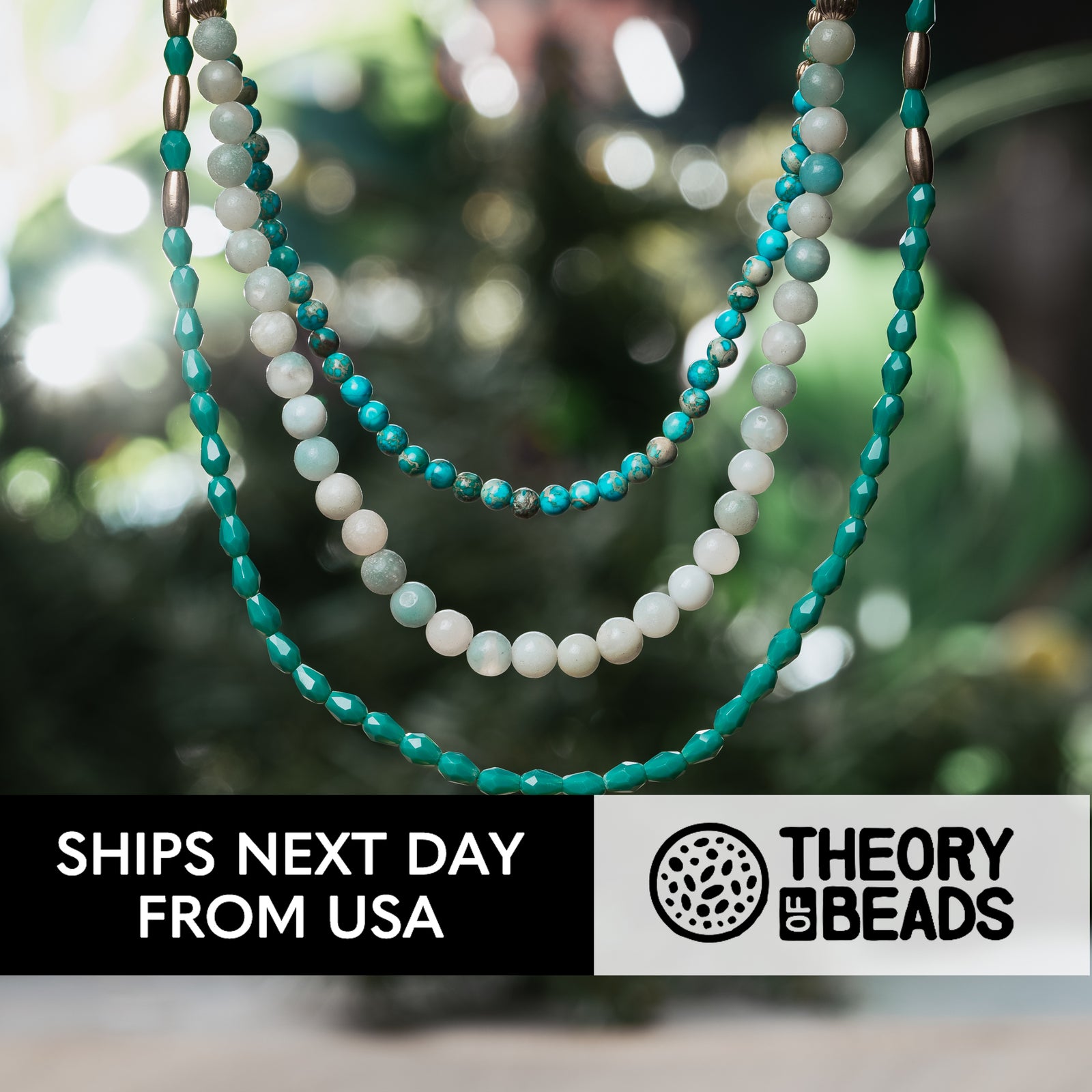
Ocean Blue Amazonite Triple Necklace is a striking choice for layered styling, with its cool blue tones creating a fresh, relaxed look. Royal Jasper Bead Necklace offers a more grounded option, pairing warm natural stone character with a classic beaded design. These styles can work with everyday outfits while still giving your jewelry collection some personality. The best pick depends on your preferred colors, necklace length, and styling habits. Natural variations in stone also mean each piece can have its own subtle character.
Final Thoughts
Choosing between a natural stone necklace vs crystal necklace becomes much easier when you look beyond the first impression. Natural stones bring organic patterns, earthy tones, and subtle variations, while crystals can offer clarity, faceted surfaces, and eye-catching reflections. The right choice depends on your personal style, how frequently you plan to wear it, and how much care you are comfortable giving it.
Remember, a necklace should feel good to wear as well as look good with your wardrobe. Consider the stone, construction, finish, and overall design before making your choice, and you can find a piece that feels like a natural part of your everyday jewelry collection.
Add a New Favorite to Your Jewelry Box
A great jewelry collection comes together through pieces that feel personal, easy to wear, and true to your style. Explore Theory of Beads for more natural stone designs, with beautiful options beyond necklaces. Browse our gemstone earrings for a subtle touch of color, discover stone bracelets for effortless everyday styling, or explore tila beads for something more distinctive. Your next favorite piece may be waiting in a style you have not tried yet.
Frequently Asked Questions
What is the main difference between natural stone and crystal necklaces?
Natural stone necklaces usually feature rocks or minerals shaped for jewelry, while crystal necklaces use materials with an organized crystalline structure. The two categories can overlap because some natural stones contain crystalline minerals.
Is a natural stone necklace better for everyday wear?
The answer depends on the specific stone rather than the necklace category. Hardness, toughness, porosity, cleavage, and resistance to chemicals all affect how well a piece handles regular use.
Can natural stone necklaces have different colors and patterns?
Yes. Natural formation can produce variations in color, veining, banding, inclusions, and texture. Slight differences between beads can give a necklace a more organic appearance.
Are crystal necklaces durable?
Many crystal materials can work well in necklaces, but durability varies by mineral. Hardness can help with scratch resistance, while toughness and cleavage affect how well the material handles impacts.
How can you tell if a gemstone necklace is natural?
Look for natural variations, internal inclusions, consistent material information, and treatment disclosures. A reputable seller should provide clear details about the stone rather than relying on vague claims.
Which gemstones are suitable for daily wear?
Quartz, agate, jasper, jade, and amethyst can be practical choices for regular necklace use. The specific variety, construction, finish, and care requirements still matter.
Can I wear a natural stone necklace every day?
Yes, provided the stone is suitable for regular use and receives appropriate care. Contact with perfumes, harsh cleaners, prolonged moisture, and repeated impact can affect certain materials.
How should I choose between natural stone necklace vs crystal necklace?
Consider your preferred appearance, wearing routine, durability needs, and maintenance expectations. Natural stones suit organic and earthy styles, while crystals can appeal to those who prefer clarity, facets, or stronger light reflection.
Does a natural stone necklace cost more than a crystal necklace?
Price depends on the material, quality, rarity, size, craftsmanship, treatments, and design. The natural or crystal classification alone does not determine value.