What Are Natural Stone Necklaces? Meaning, Benefits, and How to Wear Them
For centuries, people have turned to stones not just for their beauty, but for the stories, traditions, and meanings they carry. Ancient civilizations such as the Egyptians, Greeks, and Romans wore stones as jewelry, amulets, and personal keepsakes, believing that certain materials could bring protection, strength, balance, or good fortune. That old connection has not disappeared. It has simply found its way into modern fashion, where natural stones are worn in necklaces.
Which brings us to the questions: What are natural stone necklaces, and what makes them different from ordinary beaded jewelry?
This guide breaks it all down, from the natural stone necklace meaning and common stone varieties to the benefits people associate with them and simple ways to wear a natural stone bead necklace without overthinking it. You will have a clearer idea of what to look for and how to pick a piece that feels right for you.
Quick answer: Natural stone necklaces are jewelry pieces made with naturally occurring minerals or rocks that have been cut, polished, drilled, and assembled as beads, pendants, chips, or decorative elements. Their natural colors, markings, and inclusions give each necklace an individual appearance.
What Are Natural Stone Necklaces?
Natural stone necklaces are jewelry pieces made from stones that occur naturally in the earth and are shaped, polished, drilled, and assembled into wearable forms. Common materials include quartz, amethyst, turquoise, jasper, agate, lapis lazuli, and tiger’s eye. The stones may be cut into beads, pendants, chips, or polished slabs before being attached to a chain, cord, or thread.
Their mineral composition determines characteristics such as hardness, color, transparency, luster, and pattern. Unlike synthetic stones, natural stones form through geological processes such as crystallization, sedimentation, metamorphism, and mineral deposition. Surface variations and inclusions are natural features rather than manufacturing defects.
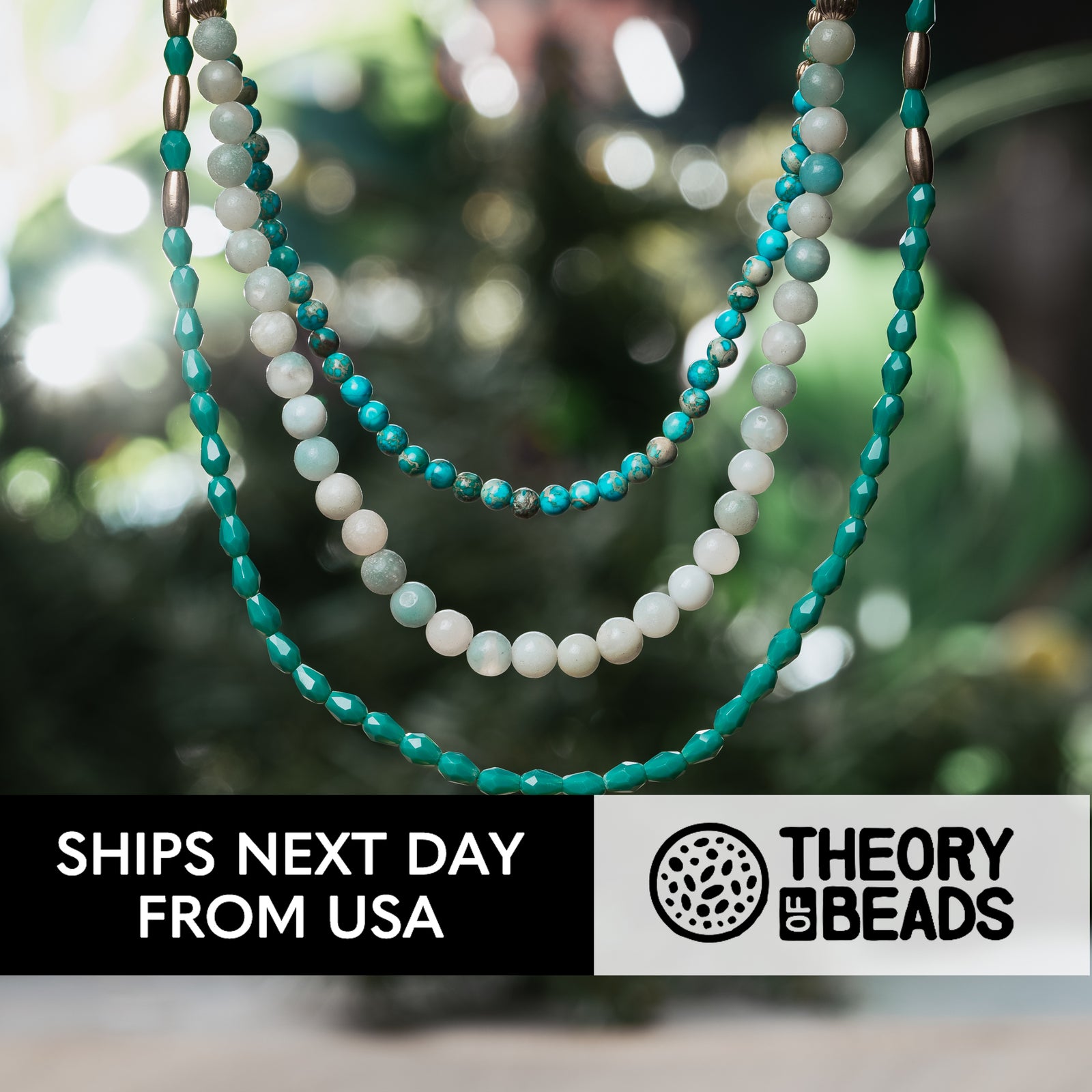
Product Example:
Ocean Blue Amazonite Triple Necklace
Types of Natural Stones for Jewelry: Popular Picks for Necklaces
 Natural stones come in a wide range of colors, textures, patterns, and mineral compositions, which makes them a versatile choice for necklaces and other jewelry. Some are transparent and crystalline, while others have opaque surfaces with distinctive bands, veins, or inclusions. Most popular options are discussed below:
Amethyst
Amethyst is a purple variety of quartz, with colors ranging from pale lavender to deep violet. Its relatively good hardness makes it suitable for regular jewelry use. The stone is known for its crystalline appearance and natural color variations.
Recommended products: Mystical Amethyst Necklace
Rose Quartz
Rose quartz is a pink variety of quartz with a soft, understated appearance. Its gentle pink shades work well in casual and feminine jewelry designs. It is commonly shaped into smooth beads, pendants, and polished pieces.
Recommended product: Love Rose Quartz Necklace
Turquoise
Turquoise is an opaque mineral that typically appears in blue, blue-green, or green shades. Natural turquoise can contain dark veins or matrix patterns created by surrounding minerals. These irregular markings give individual pieces a distinctive appearance.
Recommended product: Tribal Blue Turquoise Necklace
Tiger’s Eye
Tiger’s eye is a quartz-based gemstone recognized by its golden-brown color and chatoyant effect. Chatoyancy creates a shifting band of light across the stone's surface as it moves. This visual effect makes tiger’s eye particularly striking in beaded necklaces and pendants.
Recommended product: Fearless Tiger's Eye Beaded Necklace
Lapis Lazuli
Lapis lazuli is a deep blue rock composed primarily of lazurite, along with other minerals such as calcite and pyrite. Small golden pyrite inclusions can appear across its surface, creating a contrast against the blue background.
Jasper
Jasper is an opaque variety of chalcedony that occurs in many colors and patterns. Red, green, yellow, brown, and multicolored varieties are common. Its natural patterns make it especially popular for statement necklaces and larger beads.
Recommended product: Blue Native Turquoise and Jasper Stone Bracelet
Agate
Agate is a variety of chalcedony recognized for its layered or banded appearance. Different mineral deposits create lines and patterns within the stone, resulting in considerable variation between individual pieces. Agate works particularly well for colorful and patterned jewelry.
Recommended product: Teardrop Jasper and Agate Stone Necklace
Amazonite
Amazonite is a variety of feldspar that typically displays blue-green to green coloring. White streaks or variations may appear throughout the stone. Its cool tones make it a popular choice for relaxed, nature-inspired necklace designs.
Recommended product: Healing Blue Amazonite Stone Bracelet
Ultimately, the types of natural stones for jewelry offer plenty of room for personal expression. A stone's color and pattern can set the visual tone of a necklace, while its hardness and physical properties help determine how suitable it is for everyday wear.
Read more: Birthstone Necklace Guide: The Right Stone for Every Month
Natural Stone Necklace Meaning: What Different Stones Symbolize
The symbolism associated with a natural stone necklace can make the jewelry feel more thoughtful and personal. Across different cultures and traditions, certain stones have been associated with qualities such as love, protection, confidence, peace, and strength. These associations are symbolic rather than scientifically proven, but they continue to influence how people choose and wear natural stone jewelry today.
The table below covers some of the most popular stones used in necklaces, along with their traditional meanings and distinctive characteristics.
|
Natural Stone |
Traditional Meaning & Symbolism |
Key Characteristics |
Why It Works in Necklaces |
|
Amethyst |
Traditionally associated with calmness, clarity, spiritual awareness, and inner peace. |
Purple quartz ranging from pale lavender to deep violet, often with a glassy luster. |
Its rich purple color creates an elegant look that works well for both everyday and dressier necklaces. |
|
Rose Quartz |
Commonly connected with love, compassion, tenderness, and emotional warmth. |
Usually pale pink to medium pink with a soft, cloudy appearance. |
Its gentle color pairs easily with neutral, pastel, and feminine outfits. |
|
Turquoise |
Traditionally regarded as a stone of protection, good fortune, and connection. It has held symbolic importance in several ancient cultures. |
Blue to blue-green coloring with possible brown or black matrix patterns. |
Its distinctive color makes it a natural choice for bohemian, southwestern, and statement jewelry. |
|
Tiger’s Eye |
Often associated with courage, confidence, focus, and personal strength. |
Golden-brown to reddish-brown quartz with a reflective chatoyant band. |
The shifting band of light gives beads and pendants a striking appearance when they move. |
|
Lapis Lazuli |
Traditionally linked with wisdom, truth, knowledge, and spiritual insight. Ancient cultures also valued it for its rich blue color. |
A deep blue rock that may contain white calcite and tiny golden pyrite inclusions. |
Its intense blue shade and natural golden flecks give necklaces a distinctive, sophisticated character. |
|
Jasper |
Commonly associated with grounding, stability, strength, and connection with nature. |
Opaque chalcedony with extensive color and pattern variations. |
Its earthy tones and unusual patterns make it suitable for casual, rustic, and nature-inspired jewelry. |
|
Agate |
Traditionally associated with balance, stability, protection, and harmony. |
Banded chalcedony displaying layers and patterns in different colors. |
Every piece can have a different pattern, giving beaded necklaces a naturally individual appearance. |
|
Amazonite |
Often connected with balance, calmness, communication, and self-expression in crystal traditions. |
Blue-green to green feldspar, commonly marked by white streaks or variations. |
Its cool green-blue shades create a fresh, understated look for everyday necklaces. |
Benefits of Wearing Natural Stone Necklaces
 Natural stone necklaces offer practical and personal appeal beyond the traditional meanings associated with individual stones. Their benefits are primarily related to appearance, versatility, individuality, and sentimental value rather than scientifically established healing effects.
-
Natural individuality: Variations in color, veining, inclusions, and pattern can make every necklace look slightly different.
-
Versatile styling: Natural stones can complement casual clothing, work outfits, layered jewelry, and more polished looks.
-
Meaningful symbolism: Some people choose stones based on traditional associations, birth months, memories, or personal intentions.
-
Color and texture: Stone beads and pendants can add dimension to an otherwise simple outfit.
-
Thoughtful gifting: A necklace selected for its color, symbolism, or birthstone connection can feel more personal than a generic accessory.
-
Wide range of designs: Natural stones can be shaped into delicate beads, larger pendants, polished chips, or statement pieces.
How to Choose a Natural Stone Necklace
Choosing a natural stone necklace is not only about picking a color you like. The stone itself, necklace length, bead size, construction, and intended use can all affect how the piece looks and feels when worn. Here are some tips for you:
Consider the Stone and Its Characteristics
Start with the stone itself. Look at its color, pattern, surface texture, transparency, and natural markings. Stones such as agate and jasper can show dramatic patterns, while rose quartz and amethyst tend to offer more consistent color ranges.
The physical properties matter too. Hardness, cleavage, porosity, and sensitivity to chemicals or heat can affect how a stone handles everyday wear. A necklace intended for frequent use should suit your lifestyle and the level of care you are willing to provide.
Choose a Color That Works With Your Wardrobe
Color can make or break the overall look of a necklace. Neutral stones such as tiger’s eye, jasper, and agate can work well with earthy and casual clothing. Blue and green stones such as turquoise and amazonite can bring a cooler touch to simple outfits, while amethyst and rose quartz can add softer color.
A necklace does not need to match your clothes perfectly. A little contrast can make the stone stand out and turn it into the focal point of an outfit.
Pay Attention to Bead Size and Shape
Bead size affects the visual weight of the necklace. Smaller beads create a delicate appearance, while larger beads make a stronger statement. Smooth round beads usually give a classic look, whereas irregular, faceted, or chip-style stones create a more relaxed and organic feel.
Think about your usual jewelry style before choosing. A large statement necklace may look beautiful but may not be practical if you prefer understated accessories.
Pick the Right Necklace Length
Necklace length changes where the stone sits and how it works with your neckline.
|
Length |
General Look |
Works Well With |
|
14–16 inches |
Close-fitting and delicate |
Open necklines and layered jewelry |
|
18 inches |
Classic and versatile |
T-shirts, blouses, and everyday outfits |
|
20–24 inches |
More relaxed and noticeable |
Crew necks, dresses, and casual outfits |
|
26+ inches |
Long and statement-making |
Layered looks and simple clothing |
These measurements are general guidelines because body shape, bead size, and necklace design can change the final fit.
Look for Natural Variations
Natural stones are not expected to look perfectly identical. Small differences in color, inclusions, lines, and patterns can indicate the individuality of the material. A strand of natural stone beads may therefore have slight variations from bead to bead.
That variation is part of the appeal. Instead of looking for a completely uniform appearance, look for stones whose natural character suits your taste.
Check the Necklace Construction
A beautiful stone still needs a well-made setting or stringing system. Examine how the beads are threaded, how securely the clasp is attached, and whether the necklace feels balanced when held.
For beaded necklaces, consistent spacing and secure finishing can make a noticeable difference in durability. For pendants, check how securely the stone sits within its setting or bail.
Consider How You Plan to Wear It
Think about your everyday routine before making a decision. A simple beaded necklace may suit someone looking for an everyday accessory, while a larger pendant may work better for occasional wear.
If you plan to wear the necklace frequently, consider the stone's care requirements as well. Some stones tolerate regular handling better than others, so choosing a piece that matches your lifestyle can save you trouble later.
Buy From a Reliable Seller
Natural stone terminology can sometimes be confusing because treatments, dyed materials, composite stones, and imitations can look similar to untreated natural stones. A reputable seller should provide clear information about the material, treatments, dimensions, and care requirements.
A little research before buying can help you understand exactly what you are paying for and make it easier to choose a necklace you will genuinely enjoy wearing.
Choose a Stone Based on Its Meaning
The meaning associated with a stone can make a necklace feel more personal. Traditional symbolism gives many natural stones a distinct identity, so think about the quality or idea you want your jewelry to represent. Amethyst is traditionally linked with calmness and clarity, rose quartz with love and compassion, and tiger’s eye with courage and confidence. Turquoise has long been associated with protection and good fortune, while lapis lazuli is connected with wisdom and truth.
How to Wear Natural Stone Necklaces
Natural stone necklaces can fit into almost any wardrobe when the stone, length, and overall design work together. The key is to let the necklace complement your outfit rather than compete with it.
-
Pair with simple outfits: A natural stone necklace can become the focal point of a plain T-shirt, blouse, or neutral dress without making the outfit feel overdone.
-
Match the mood of the stone: Earthy stones such as jasper and tiger’s eye suit relaxed, nature-inspired looks, while amethyst and rose quartz can work well with softer or more polished outfits.
-
Layer different lengths: Combine a shorter stone necklace with a longer chain to create depth. Different textures can make the layers look more intentional.
-
Let statement stones stand out: Larger beads or bold pendants usually work best with simple clothing and minimal competing jewelry.
-
Coordinate with other accessories: Keep the overall look balanced by pairing colorful stones with understated earrings, bracelets, or rings.
-
Consider the neckline: Shorter necklaces tend to work well with open necklines, while longer designs can sit nicely over high-neck tops, sweaters, and simple dresses.
-
Wear one as an everyday signature: A smaller natural stone bead necklace can become an easy accessory for daily outfits, adding color and personality without requiring much styling.
Read more: How to Layer Gemstone Necklaces Like a Pro
How to Care for a Natural Stone Necklace
Care requirements vary because natural stones differ in hardness, porosity, and sensitivity to moisture, heat, and chemicals. Check the seller’s instructions for the specific stone before cleaning it.
-
Put the necklace on after applying perfume, lotion, hairspray, and cosmetics.
-
Wipe it gently with a soft, slightly damp cloth when appropriate.
-
Avoid soaking porous stones such as turquoise.
-
Keep natural stone jewelry away from chlorine and harsh household cleaners.
-
Store the necklace separately in a dry, soft-lined pouch or compartment.
-
Check the clasp, cord, wire, knots, and bead connections periodically.
-
Avoid using ultrasonic or steam cleaners unless they are confirmed safe for the stone.
Are Natural Stone Necklaces Right for You?
A natural stone necklace may suit you if you value individual color variations, organic patterns, symbolic meaning, or jewelry inspired by nature. Before buying, consider how the necklace fits your wardrobe, how often you will wear it, and how much care the stone requires. The right choice should feel comfortable, suit your style, and hold meaning for you without relying on unproven claims.
To Sum Up
Asking “What are natural stone necklaces?” opens the door to more than a simple definition. These pieces combine geological variation, jewelry craftsmanship, cultural symbolism, and personal style. When choosing one, consider the stone’s appearance, durability, treatment, necklace length, construction, and care requirements. The best choice is a necklace that feels comfortable, complements your wardrobe, and carries meaning that resonates with you.
Discover Jewelry With a Natural Touch
Bring more natural character into your everyday style with Theory of Beads. Start with a natural stone necklace that catches your eye, then explore stone earrings, gemstone bracelets, beaded Apple Watch straps, and more to create combinations that feel distinctly yours. Each piece offers its own colors, patterns, and personality. Shop now!
Frequently Asked Questions
What are natural stone necklaces made from?
Natural stone necklaces are made from naturally occurring stones that are cut, shaped, polished, drilled, and assembled into jewelry. Common materials include amethyst, rose quartz, turquoise, tiger’s eye, agate, jasper, and lapis lazuli.
What is the meaning behind wearing a natural stone necklace?
The meaning of a natural stone necklace can vary depending on the stone and cultural tradition. Amethyst is traditionally associated with calmness, rose quartz with love, tiger’s eye with courage, and turquoise with protection. These associations are symbolic and are not scientifically established effects.
How can you tell if a stone necklace is natural?
Look for natural variations in color, texture, inclusions, and patterns. Reliable sellers should also provide clear information about the stone material and any treatments. An extremely uniform appearance or unusually low pricing may warrant additional research.
Are natural stone necklaces suitable for everyday wear?
Many are suitable for regular use, but durability varies between stones. Consider the stone's hardness, sensitivity to chemicals, moisture, heat, and impact before wearing it every day. Proper storage and care can also help maintain its appearance.
What are the most popular natural stones for necklaces?
Popular choices include amethyst, rose quartz, turquoise, tiger’s eye, agate, jasper, amazonite, and lapis lazuli. Each offers different colors, patterns, physical properties, and traditional symbolism.
Can I wear a natural stone necklace with other jewelry?
Yes. A natural stone necklace can be paired with earrings, bracelets, rings, or other necklaces. Similar metal finishes, complementary colors, and different necklace lengths can help create a balanced layered look.
How should I clean and store a natural stone necklace?
Cleaning requirements depend on the specific stone. A soft, slightly damp cloth is generally a safer starting point than harsh cleaners. Store the necklace separately in a dry, soft-lined space to reduce scratching, tangling, and unnecessary exposure to moisture or chemicals.
Can natural stone necklaces have different colors or patterns?
Yes. Natural stones can display variations in color, inclusions, bands, veins, and surface patterns due to their mineral composition and geological formation. These differences are part of what gives individual pieces their distinctive appearance.
How do I choose the right stone for a necklace?
Consider the stone's color, pattern, durability, traditional symbolism, necklace length, bead size, and your personal style. The intended use also matters, since an everyday necklace may require different characteristics than an occasional statement piece.
Where can I find natural stone jewelry?
Theory of Beads offers natural stone jewelry in a variety of styles, including necklaces, stone earrings, gemstone bracelets, and other beaded pieces. Exploring different stone types and designs can help you find jewelry that fits both your style and preferences.